The Shifting Sands of California Home Insurance
Think about the Millers. They aren’t real, but their story is playing out across California right now. They found their dream home just a few years ago—a charming craftsman tucked into the foothills of the Santa Monica Mountains, with sweeping views of the Pacific. They loved the oak trees, the quiet, the feeling of getting away from it all. They signed the papers, moved in, and for a while, everything felt perfect. Then came the renewal notice for their home insurance. The premium had jumped almost 60% in two years. Their insurer, a big name they’d trusted for decades, was suddenly non-renewing policies in their entire zip code. Paradise was starting to feel a lot more precarious.
For most California homeowners, especially those living in or near the wildland-urban interface—the WUI, as the experts call it—the insurance market has become a minefield. It’s not just about rising costs anymore. It’s about finding coverage at all. The very places that make California so beautiful, the rolling hills, the canyons, the forests, are also the places most vulnerable to devastating wildfires.
Why Insurers are Tiptoeing Out
The simple truth is, insurers are businesses. They calculate risk versus reward. When the risk of catastrophic loss skyrockets, and state regulations limit how much they can charge to cover those risks, they pull back. It’s not personal; it’s just math.
We’ve seen major players like State Farm and Allstate announce they’re no longer writing new policies in California. Other companies, like Farmers, have significantly scaled back their offerings. This isn’t just a blip; it’s a trend that’s been building for years, fueled by a series of increasingly destructive fire seasons. Remember the Camp Fire in Paradise, or the Woolsey Fire in Malibu and Ventura County? Those events changed everything for the insurance industry. Billions in losses.
What does this mean for homeowners? Less competition. Higher premiums for those who can still get traditional coverage. Some folks have seen their rates jump 30%, 40%, even 60% between 2022 and 2024. The Millers’ story isn’t unique; it’s the new normal for many. They found themselves scrambling, calling agent after agent, only to hear the same disheartening news.

Understanding California’s Fire Zones
So, what exactly makes a home “fire prone” in an insurer’s eyes? It’s more than just a vague feeling of being “in the hills.” California, through CAL FIRE, has mapped out areas of varying fire severity. These maps, along with proprietary risk models developed by individual insurers, determine your home’s specific vulnerability.
Think about places like the eastern edges of the Inland Empire, the foothills of the Sierra Nevada near Placerville, or the iconic canyons of Orange County. These areas might look vastly different, but they share a common thread: they’re nestled close to natural vegetation, dry chaparral, or dense forests, all of which are ready fuel for a wildfire.
Insurers consider a host of factors beyond just the CAL FIRE maps. They look at your specific address. How steep is the slope your house sits on? What kind of vegetation is directly surrounding your property? How accessible is your street for fire trucks? Is there only one way in and one way out? All these details get fed into complex algorithms that spit out a “brush score” or a “wildfire risk score.” A high score means a higher premium—or worse, no coverage at all from standard carriers.
Beyond the Brush: What Drives Your Premium Up
The natural environment is a huge piece of the puzzle, sure. But your home itself plays a massive role.
Consider the construction materials. A house with wood siding and a shake roof built in the 1970s is seen as a much higher risk than a stucco home with a tile roof, even if they’re right next door to each other. Insurers want to see “fire-hardened” homes. That means things like ember-resistant vents, enclosed eaves, dual-pane windows, and non-combustible decking.
Then there’s your defensible space. State law requires homeowners to maintain 100 feet of defensible space around their structures. This isn’t just a suggestion; it’s a critical fire safety measure. Are your gutters clear of leaves and pine needles? Are there any trees overhanging your roof? Is your landscaping full of highly flammable plants, or have you opted for more fire-resistant varieties?
Also, don’t forget the practical stuff: how far are you from the nearest fire station? How about a fire hydrant? The longer it takes for help to arrive, the higher your risk. And yes, your claims history matters. Even small claims can flag your property as higher risk.
The FAIR Plan: A Safety Net, But With Holes
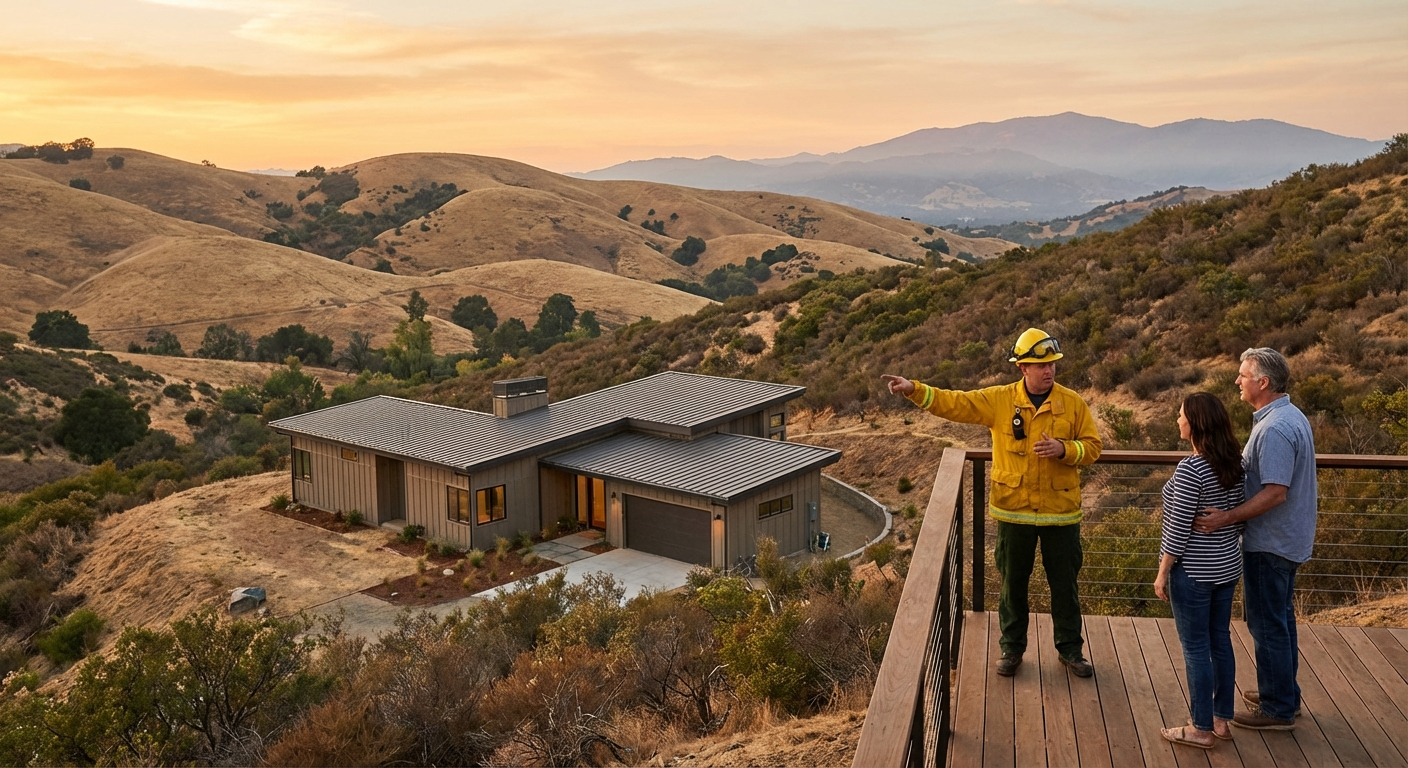
So, what happens when you’ve called everyone, and no standard insurance company will touch your property? That’s where the California FAIR Plan steps in. It’s California’s “insurer of last resort.”
The FAIR Plan is designed to provide basic fire insurance coverage for properties that can’t get it anywhere else. It’s a literal lifeline for many, including the Millers who, after weeks of searching, were told their only option was the FAIR Plan.
But here’s where it gets interesting. The FAIR Plan typically covers fire, lightning, internal explosion, and smoke damage. That’s it. It doesn’t cover things like theft, vandalism, liability, water damage from a burst pipe, or injuries that happen on your property. For those protections, you need what’s called a “wrap-around” policy.
Finding a wrap-around policy can be just as challenging as finding a standalone policy. You’re essentially piecing together your home insurance, which isn’t ideal for anyone. The FAIR Plan has also seen its own challenges, with increasing demand straining its capacity and sometimes leading to higher premiums. The short answer is yes, it’s there to help. The real answer is it takes a bit more work and often costs more than a traditional policy.
Finding Coverage When Options Seem Slim
This is precisely where the expertise of an independent insurance agent becomes invaluable. Unlike agents who work for a single company, independent agents represent multiple carriers. They can shop around for you, exploring options you might not even know exist, including smaller, specialty insurers who are willing to take on higher risks—for a price.
Someone like Karl Susman at LA Home Insurance Quotes, with his CA License #0B75129, has seen it all. He understands the intricacies of the California market, knows which underwriters are still writing in specific areas, and can help you navigate the often-confusing world of the FAIR Plan and wrap-around policies. He’s the kind of professional who can help make sense of the chaos and find a solution, even if it’s not the perfect, low-cost policy of yesteryear. You can reach him at (877) 411-5200.
Which brings up something most people miss: mitigation. Insurers are increasingly looking for homeowners who are actively reducing their risk. If you’ve invested in a metal roof, installed ember-resistant vents, or created an immaculate defensible space, some insurers might be more willing to consider your property. It doesn’t guarantee a policy, but it certainly helps your case. Sometimes, an insurer will even require a property inspection to verify these mitigation efforts before offering coverage.
What Homeowners Can Do Right Now
It’s easy to feel helpless when faced with such a tough insurance market. But you aren’t entirely without options.
First, don’t wait until your renewal notice arrives. Start looking for new coverage at least 90-120 days before your current policy expires. The sooner you start, the more options you’ll have, and the less panic you’ll feel.
Next, get an independent agent on your side. They are your best resource for finding coverage in this challenging environment. They know the market, they know the carriers, and they can help you understand all the nooks and crannies of policies you’d never find on your own.
Honestly, harden your home. It’s not just about getting insurance; it’s about protecting your biggest asset and, more importantly, your family. Clear those gutters. Trim back trees and shrubs. Clean up any dead vegetation around your property. Consider upgrading your roof or vents. Every little bit helps.
Understand your current policy. What does it cover? What are the limits? Don’t assume anything. Many homeowners are surprised to learn they’re underinsured after a disaster.
Finally, know your home’s fire risk rating. Ask your agent about it. The more informed you are, the better decisions you can make about mitigation and coverage.
If you’re feeling overwhelmed, or just want a clear path forward, reach out to Karl Susman at LA Home Insurance Quotes. You can start the process of getting a quote right now by visiting our easy online form: https://lahomeinsurancequotes.com/quote/
The Future of Fire Insurance in California
This isn’t just a temporary hiccup. The realities of climate change and increased wildfire activity mean the insurance market in California is fundamentally changing. State regulators, like the California Department of Insurance, are working on new rules—like allowing insurers to use forward-looking wildfire models rather than just historical data. The idea is to give insurers more confidence in pricing risk, which hopefully encourages them to write more policies.
But it’s a slow process. It’s a delicate balance between ensuring insurance is available and keeping it affordable for everyday Californians. The expectation is that homeowners who invest in hardening their homes and creating defensible space will eventually see some benefit in their premiums. It’s not a quick fix, but it’s a direction. The Millers, after much effort, finally secured a FAIR Plan policy with a wrap-around, allowing them to keep their dream home. They’ve also started the long process of fire-hardening their property, hoping it will make a difference down the line.
Finding the right coverage takes persistence and expertise. Don’t go it alone. Get in touch with Karl Susman, CA License #0B75129, or click here to begin your quote: https://lahomeinsurancequotes.com/quote/
Frequently Asked Questions About California Fire Zone Insurance
What exactly is the “wildland-urban interface” (WUI)?
The WUI is simply the zone where homes and other human development meet or intermingle with wildland vegetation, like forests, grasslands, or chaparral. These areas are particularly susceptible to wildfires because there’s plenty of fuel for a fire to spread directly into neighborhoods.
Can I get homeowners insurance if my home is in a high fire risk area?
The short answer is yes. The real answer is more complicated. It’s much harder to get traditional coverage from major insurers. You might need to rely on the California FAIR Plan for fire coverage, combined with a separate “wrap-around” policy for other perils. An independent agent can help you explore all your options.
What is “defensible space” and why is it so important?
Defensible space is the area around your home that has been managed to slow or stop the spread of wildfire. California law requires homeowners to maintain 100 feet of defensible space. It involves removing flammable vegetation, clearing dead leaves and needles, and pruning trees. It dramatically increases your home’s chance of surviving a wildfire.
Will fire-hardening my home help me get better insurance?
Potentially, yes. While it’s not a guarantee, many insurers are starting to recognize and reward homeowners who take proactive steps to make their homes more resistant to fire and embers. This includes things like installing ember-resistant vents, using fire-resistant roofing materials, and upgrading windows. It shows you’re taking risk reduction seriously.
How can an independent insurance agent help me if I live in a fire zone?
Independent agents, like Karl Susman, work with many different insurance companies, not just one. This means they can shop around for you, comparing policies and prices from a wider range of carriers, including specialty insurers who might be more willing to cover properties in high-risk areas. They can also help you understand the FAIR Plan and find suitable wrap-around coverage.
This article is for informational purposes only and does not constitute financial advice.