
The Hidden Threat Beneath Your California Home
Maria lived in Glendale, in a sweet little bungalow built in the 1950s. She loved its charm, the mature jacaranda tree in the front yard, the quiet street. One Tuesday morning, she woke up to a gurgling sound she couldn’t place. It wasn’t the sink, not the toilet. It seemed to come from deeper, from below the house itself. A faint, earthy smell started to creep into the bathroom.
She thought, “Maybe it’s just a clogged drain.” She tried a plunger. Nothing. The gurgling grew louder. Soon, a small, damp spot appeared on her bathroom floor, near the wall. Maria called a plumber, expecting a simple fix.
The plumber arrived, did some checks, and then delivered the news: her main sewer line, running from the house to the city connection under the street, had collapsed. Tree roots from that beautiful jacaranda had finally won the long war against decades-old clay pipes. The repair? Thousands of dollars. Digging up her front yard, maybe even part of the street. Maria felt sick. “My home insurance covers everything, right?” she asked, desperate.
The plumber just shook his head. “Ma’am, that’s usually not how it works.”
And he was right. For most California homeowners, that story is a nightmare come true, because standard home insurance policies often leave you utterly exposed to damage involving your service lines. That’s where something called service line coverage steps in.
What Exactly Are These “Service Lines”?
Think about all the essential stuff that connects your house to the outside world. Your water pipe, bringing fresh water in. The sewer line, taking wastewater out. The gas line, fueling your furnace and stove. Electrical wires, supplying power. Sometimes even dedicated lines for internet or cable. These aren’t just inside your walls. They run underground, from your property line—or even the utility’s main connection point—right up to your house.
Many people assume these lines are the responsibility of the city or the utility company. And some parts are. But generally, the moment those pipes and wires cross your property line, or after the meter, they become *your* responsibility. Yes, you own them. Which means if they break, you pay.

Why Your Standard Policy Likely Falls Short
Most basic homeowners policies are designed to protect what’s inside your home, or directly above ground. They cover damage from things like fire, theft, windstorms, or a sudden burst pipe *inside* your house. They’re great for a kitchen fire or a stolen laptop.
But underground? That’s a different story. Standard policies typically exclude damage to exterior underground piping and wiring. The logic is that these lines are subject to wear and tear, ground movement, and other issues not generally covered by perils like fire or hail.
California, with its diverse geography and aging infrastructure, presents unique challenges. We’ve got homes in older neighborhoods like Pasadena, Long Beach, and the Valley with pipes that have been in the ground since before World War II. We have shifting earth, thanks to seismic activity, even if it’s not a direct earthquake claim. Plus, the extreme weather swings we’ve seen—droughts causing soil to contract, followed by heavy rains causing it to expand—put immense stress on buried lines. Tree roots, especially in lush areas of Ventura County or the Sacramento suburbs, are relentless. They’re always looking for moisture, and a tiny crack in a pipe is an open invitation.
The Cost of Ignoring the Underground
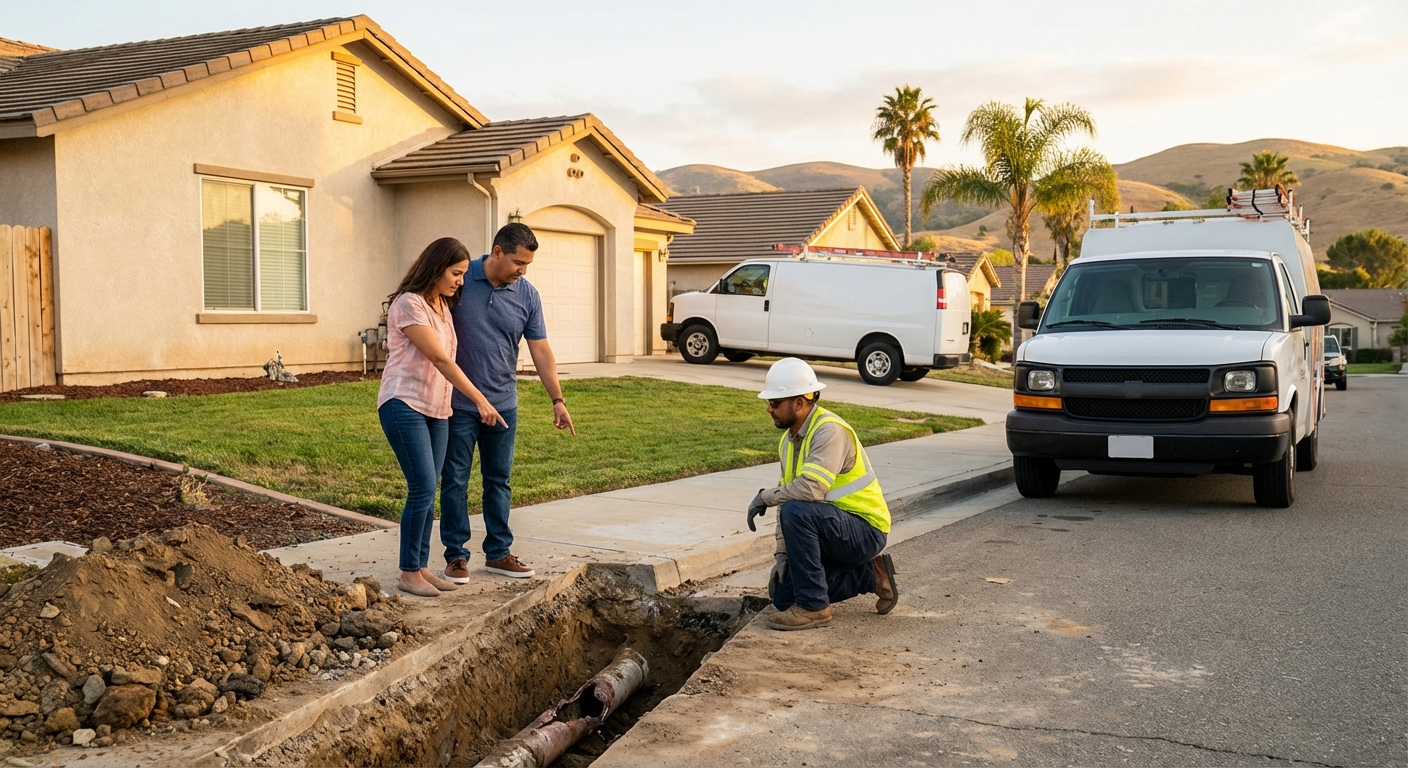
Let’s not sugarcoat it: these repairs are expensive. A broken water line can easily run you anywhere from $3,000 to $10,000 or more. That involves excavation, pipe repair or replacement, and then restoring your yard, driveway, or even sidewalk. Imagine a collapsed sewer line, like Maria’s. That could be a $10,000 to $30,000 bill, depending on whether they can do a “trenchless” repair or have to dig a massive ditch across your property.
Even a damaged electrical conduit can cost $5,000 to $15,000 to fix, depending on its depth and location. These aren’t minor expenses. For many families, that’s an emergency fund wiped out, or worse, a new credit card debt.
Now, compare that to the cost of adding service line coverage to your home insurance policy. Often, it’s a few hundred dollars a year, sometimes less. A small fraction of what a single repair could cost. For most California homeowners, it’s a no-brainer. This endorsement offers specific financial protection against the kind of damage that can sneak up on you from below ground.
How Service Line Coverage Works in Practice
This coverage isn’t usually part of your basic policy. It’s an endorsement. Think of it as an extra layer of protection you specifically ask for. Once added, it kicks in when a covered service line suffers a sudden, accidental breakdown. This isn’t about general wear and tear over decades, but a specific event that causes a failure.
What sorts of events? Think about things like:
- Tree root intrusion (a very common culprit in California)
- Ground shifting or settling
- Corrosion or rust
- Freezing (less common in most of California, but certainly possible in mountain communities)
- Breakage from a contractor digging too deep
The coverage limits vary, but you might find options for $10,000, $15,000, or even $20,000. This money typically covers the cost of excavation, the actual repair or replacement of the line, and even the cost to restore your yard or driveway to its previous condition. You’ll usually have a deductible, just like with your main home insurance policy, but it’s often quite reasonable for this type of coverage.
Is It Really Worth the Extra Premium?
Honestly, yes. For almost every California homeowner, it absolutely is. The short answer is yes. The real answer is more complicated, because it depends on your risk tolerance and the age of your home.
You might think, “My house is only 20 years old; my pipes are fine.” But what about the pipes running under your neighbor’s ancient redwood? Roots don’t respect property lines. Or maybe you’re in an area with expansive clay soils, like parts of the Inland Empire, where the ground moves a lot. Even new pipes can be vulnerable to external forces over time.
The peace of mind alone is worth it. No one wants to face a five-figure bill for a problem they can’t even see until it’s too late. It’s a small premium for a potentially massive financial shield.
Finding the Right Fit in California’s Insurance Scene
Not every insurer offers service line coverage, and those that do might package it differently. Some big names, like State Farm or Farmers, might have it as a straightforward endorsement. Others, maybe a regional carrier or even AAA, could include it as part of a broader package or have specific limitations. It’s not always advertised front and center, either.
This is precisely where an independent insurance agent becomes invaluable. They don’t work for one company. They work for you. Someone like Karl Susman at LA Home Insurance Quotes, CA License #OB75129, has seen it all. He understands the nuances of California homes and the particular threats they face. He can help you compare options from various carriers to find a policy that truly protects you, including these often-overlooked service lines.
You wouldn’t buy a car without checking the engine. Why buy home insurance without understanding all the parts? Get a clearer picture of your options. Head over to lahomeinsurancequotes.com/quote/ to start the conversation.
Real-World Scenarios and Unexpected Surprises
Let’s circle back to Maria in Glendale. If she’d had service line coverage, that $15,000 sewer line repair wouldn’t have been a catastrophic hit to her savings. Her policy’s endorsement would have covered the excavation, the new pipe, and the landscaping, minus her deductible. The stress would have been about the inconvenience, not the looming debt.
Here’s where it gets interesting. Imagine a family in Ventura County. They’ve got an older home, and one day, their gas meter stops showing usage, but they smell gas. It’s a corroded gas line, weakened by years of damp soil and small seismic shifts. That’s not just an expense; it’s a safety hazard. Service line coverage helps get that fixed quickly and safely, without the added financial strain.
But wait — what if it’s a public utility line? If the break is on the city’s side of the property line, or before your meter, it’s usually their problem. This coverage is specifically for the lines you own, the ones connecting your house to their main system. Big difference.
The inconvenience factor often gets overlooked. When a service line breaks, you could be without water, sewer, or even electricity for days. That means temporary housing, bottled water, maybe even eating out more. While the coverage won’t pay for your hotel bill, it takes away the financial panic of the repair itself, letting you focus on getting things back to normal.
Beyond the Basics: What to Ask Your Agent
Honestly, it’s not the sexiest part of your policy. It’s not like talking about a new kitchen. But it can be the most important when disaster strikes. So, when you’re reviewing your home insurance, don’t just glance at the numbers. Ask specific questions about service line coverage:
- What are the exact coverage limits available?
- What’s the deductible specifically for service line claims? Is it different from my main deductible?
- Are there any specific exclusions I should know about? (For instance, does it cover damage from frozen pipes, or only specific types of damage?)
- Does it cover just pipes, or electrical lines and communication cables too?
- What about damage to trees or landscaping as a result of the repair? Is that covered?
Ask these questions *before* a problem arises. It’s much easier to understand your coverage when you’re not in a panic. An experienced agent, like Karl Susman, can walk you through the fine print and help you tailor a policy that fits your home’s unique needs and risks. Don’t leave your underground infrastructure to chance. Find out what you’re really covered for.
Ready to explore your options and ensure your California home is protected from the ground up? Visit lahomeinsurancequotes.com/quote/ today.
FAQ About California Service Line Coverage
What causes service line damage in California?
Many things! Tree roots are a huge problem, especially in older, tree-lined neighborhoods. Ground shifting from seismic activity or changing soil moisture (droughts followed by heavy rains) also puts stress on pipes. General corrosion due to age, pressure, or even construction activity in your yard can also lead to breaks.
Is service line coverage mandatory in California?
No, it’s not mandatory. It’s an optional add-on or endorsement to your standard home insurance policy. However, given the potential costs of repairs, many homeowners find it to be a very smart investment.
Does my homeowners policy automatically include this?
Almost never. Standard homeowners policies typically exclude damage to exterior underground service lines. You need to specifically ask for service line coverage to be added to your policy.
How much does service line coverage cost?
The cost varies by insurer and the coverage limits you choose, but it’s generally quite affordable. Often, it adds just a few hundred dollars a year to your premium, a small amount compared to the thousands you might pay for a single repair.
What’s the difference between service line coverage and utility line warranty programs?
Utility line warranty programs are often offered by third-party companies, sometimes in partnership with utility providers. They function more like a service contract, often with monthly fees and specific terms. Service line coverage, on the other hand, is an endorsement on your actual home insurance policy, meaning it’s integrated with your existing coverage and claims process.
This article is for informational purposes only and does not constitute financial advice.