
When Your Home is Gone, Where Do You Go? Understanding California Home Insurance Additional Living Expenses
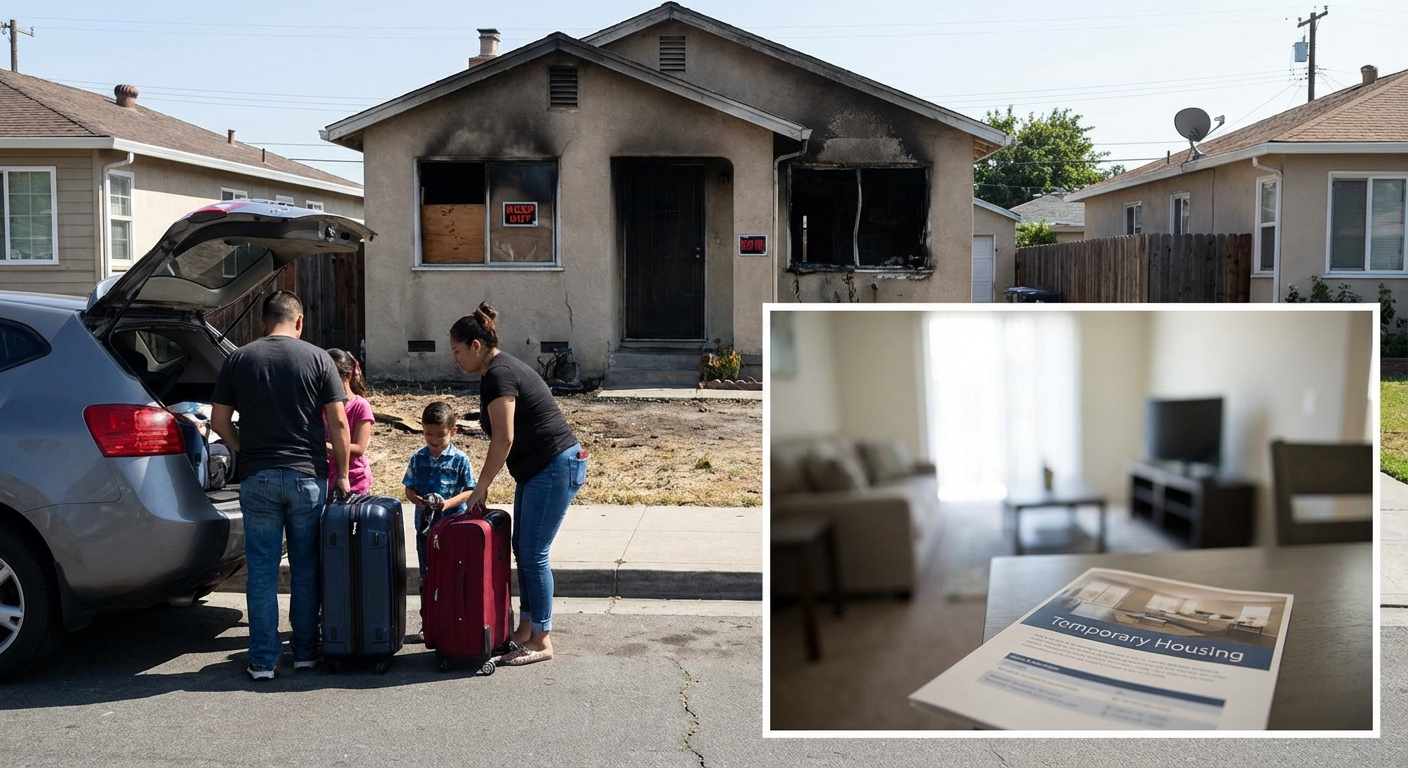
It’s a gut punch, isn’t it? That moment when you realize your home, the place you built memories, is unlivable. Maybe it’s smoke damage from a wildfire that crept too close to your Ventura County neighborhood. Perhaps a burst pipe flooded your kitchen in the Inland Empire. Or a fallen tree crushed part of your roof in the Valley. You’re already dealing with so much — the shock, the loss, the uncertainty. The last thing you need is to worry about where you’ll sleep tonight, or how you’ll feed your family tomorrow.
For most California homeowners, the idea of Additional Living Expenses, or ALE, feels like a distant “what if.” You know you have home insurance. You probably understand it covers repairs to your house. But what about the cost of actually *living* somewhere else while those repairs happen? That’s what ALE is for. It’s the safety net that catches you when your home can’t.
Honestly, it’s a part of your policy many people overlook. They focus on the big dwelling coverage number, the one that rebuilds the house. But if a disaster strikes, the ALE portion often becomes the most immediate, practical help you get. It keeps a roof over your head, even if it’s not your own, during a truly unsettling time.
What ALE Actually Pays For
So, what exactly does this section of your policy do? Simply put, ALE pays for the *additional* costs you incur because you can’t live in your home. Think of it this way: if your house burned down today, you’d still have your regular bills — your mortgage, your car payment, your phone bill. Those don’t stop. ALE doesn’t cover those. Instead, it covers the *extra* money you have to spend.
For example, you’d need a place to stay. This could be a hotel room, a short-term rental, or even a long-term apartment if repairs drag on for months. ALE covers that rent or hotel bill. You still have to eat, right? If you normally cook at home, but now you’re in a hotel without a kitchen, ALE helps with the increased cost of restaurant meals or takeout. It’ll also cover things like laundry services if you don’t have access to your own washer and dryer. Even pet boarding could be included if your furry friends can’t stay with you in temporary housing.
Sometimes, it covers mileage if you’re suddenly driving much further to work or school because you’re living across town. Every situation is different, of course. But the core idea is to put you back in a similar financial position to where you were before the loss, specifically for your day-to-day living expenses.

The Limits of Your Safety Net: Time and Money
Here’s where it gets interesting. While ALE is incredibly helpful, it’s not limitless. Every policy has a cap. This usually comes in two forms: a dollar amount and a time limit.
The dollar amount for ALE is often a percentage of your dwelling coverage. Say your home is insured for $500,000. Your ALE might be 20% of that, or $100,000. That sounds like a lot, doesn’t it? But wait — it’s also usually capped by time. Many policies will say “up to 24 months” or “up to 12 months.” This means the insurance company will pay for your additional living expenses until your home is repaired and livable again, *or* until you hit that dollar amount, *or* until the time limit runs out — whichever comes first.
But here’s the thing. In California, especially after major disasters like the 2018 Camp Fire or the Kincade Fire, rebuilding can take a long, long time. Permitting issues, labor shortages, supply chain delays — these can stretch what you think might be a six-month repair into a two-year ordeal. Imagine living in a rental for two years in Los Angeles or Orange County. The costs add up fast. That $100,000 might not go as far as you’d hope.
California’s High Costs and Disaster Realities
For most California homeowners, the cost of living is already high. Rent for a modest apartment can easily hit $3,000 or more a month in many areas. Add in food, transportation, and other incidentals, and you can see how even a generous ALE limit could be tested. This is particularly true if you live in a high-demand area like Santa Barbara or San Diego, where temporary housing options are scarce and pricey after a widespread event.
Which brings up something most people miss. California faces unique risks: wildfires in the foothills of the Sierra Nevada or the brushy canyons of Malibu, mudslides after heavy rains, and the constant threat of earthquakes (though earthquake insurance is separate, the displacement concept is the same). When a whole community is affected, the demand for temporary housing skyrockets. Prices follow. This makes having adequate ALE even more critical here than in many other states.
Think about the 2025 LA fires — not a real event yet, but a potential future. If thousands of homes were impacted, where would everyone go? The competition for rentals and hotel rooms would be fierce, driving costs through the roof. Having enough ALE isn’t just about covering current market rates; it’s about covering surge pricing in a disaster scenario.
Assessing Your ALE Needs: Don’t Guess
How do you figure out how much ALE you actually need? It’s not always simple. Most people just accept the default percentage their insurer offers. But that’s not always the smartest move.
Consider your lifestyle. Do you have a large family? Pets? Do you live in an expensive area? If your home becomes uninhabitable, what would a comparable rental cost in your neighborhood for, say, 18-24 months? Don’t forget the extra costs for eating out, laundry, and other conveniences you’d lose. It’s often higher than you think.
An experienced agent, someone who truly understands the California market and its challenges, can help you calculate a more realistic figure. They’ve seen firsthand what happens when people run out of ALE too soon. Karl Susman of LA Home Insurance Quotes, CA License #0B75129, has helped countless Californians navigate these tough situations. He understands the anxiety that comes with displacement and can guide you toward making informed choices.
Sometimes, increasing your ALE coverage doesn’t cost a fortune, but it can provide immense peace of mind. It’s a small investment for a potentially huge return in an emergency. If you’re feeling a bit lost about your coverage or just want to make sure you’re protected, it’s worth talking to someone who can break it all down for you.
For a personalized review of your home insurance and Additional Living Expenses coverage, don’t hesitate to reach out. You can get started with a free quote today: https://lahomeinsurancequotes.com/quote/
FAIR Plan and Other Policy Nuances
It’s important to remember that not all policies are created equal. If you’re insured through the California FAIR Plan — often a last resort for homeowners in high-risk areas who can’t get coverage from standard insurers like State Farm, AAA, or Farmers — your ALE might be more limited. FAIR Plan policies are designed to provide basic fire coverage, and their Additional Living Expenses limits can be lower or have stricter conditions. This is a critical detail for many homeowners in places prone to wildfires.
Also, understand the difference between “loss of use” and “additional living expenses.” While often used interchangeably, ALE is a specific component of “loss of use” coverage. “Loss of use” broadly refers to your inability to use your property, and ALE is the part that pays for the *extra* expenses you incur because of that. It’s not just about not being able to use your home; it’s about the financial burden that comes with it.
The short answer is yes, you probably have some ALE coverage. The real answer is more complicated: is it enough? Is it truly sufficient for the unique challenges of California living, especially when disaster strikes? Many Californians have learned the hard way that “enough” today might not be “enough” when a whole community is trying to find temporary housing.
Don’t wait until you’re staring at an unlivable home to find out. A little planning now can save you a lot of heartache later. Karl Susman and the LA Home Insurance Quotes team are dedicated to helping Californians understand their options and secure the right protection for their homes and families. You deserve to feel confident that no matter what happens, you’ll have a safe place to land.
To explore your options for California home insurance, including critical Additional Living Expenses coverage, get a no-obligation quote right now: https://lahomeinsurancequotes.com/quote/
Frequently Asked Questions About Additional Living Expenses (ALE)
Q: Does ALE cover my mortgage payments if I can’t live in my home?
A: No, ALE does not cover your regular mortgage payments. You’re still responsible for those. It’s designed to cover the *additional* expenses you incur because you’re displaced, like the cost of a hotel or rental unit, over and above your normal housing costs.
Q: How long will my insurance company pay for ALE?
A: Most policies have both a dollar limit and a time limit, often 12 or 24 months. The insurance company will pay for your additional living expenses until your home is repaired and livable, or until you reach either of those limits, whichever comes first.
Q: What if I stay with family or friends? Can ALE still help?
A: Yes, possibly. If you stay with family or friends, ALE might reimburse them for the extra expenses they incur by hosting you, like increased utility bills or food costs. It won’t pay them “rent” in the traditional sense, but it can cover the *additional* burden you place on their household.
Q: Is there a deductible for ALE?
A: Generally, there is no separate deductible for ALE coverage. The deductible usually applies to the dwelling repair portion of your claim. Once that deductible is met for the damage to your home, your ALE coverage typically kicks in without another separate deductible.
Q: How do I submit claims for my additional living expenses?
A: You’ll typically need to keep detailed records and receipts for all your additional expenses, such as hotel bills, restaurant receipts, and laundry costs. You’ll submit these to your insurance company for reimbursement. Your insurance adjuster will guide you through the specific process for your claim.
This article is for informational purposes only and does not constitute financial advice.