Think Your California Home Won’t Flood? Think Again.
For most California homeowners, the idea of a flood feels distant. We picture hurricanes on the East Coast, or maybe the big Mississippi River floods. Here, we worry about earthquakes, fires, and sometimes, a little too much sun. But here’s the thing: California floods. And it floods in ways you might not expect.
Remember those atmospheric rivers in 2023? They dumped feet of rain on parts of the state. Homes in Ventura County, far from any major river, saw inches of water. Neighborhoods in the Inland Empire grappled with urban runoff that became raging currents. The Valley, often dry and dusty, suddenly had roads that looked like rivers. It wasn’t just coastal areas or obvious floodplains. It was everywhere.
This isn’t some alarmist prediction. It’s our new reality. Our climate is changing, and with it, our weather patterns. We’re seeing longer droughts followed by intense, sudden downpours. That combination is a recipe for disaster. Dry ground can’t absorb water fast enough. Hillsides get saturated, leading to mudslides – which, for insurance purposes, are often considered a type of flood when caused by overflowing water.
So, if you own a home in California, flood insurance isn’t just for coastal dwellers or folks next to a big river anymore. It’s something every homeowner should seriously consider.
Myth #1: My Standard Homeowner’s Policy Covers Flood Damage.
This is probably the biggest misconception out there, and it’s a dangerous one. You’d think your homeowner’s insurance, the policy you pay for religiously, would cover water damage, right? Not always. Not even close.
Your typical homeowner’s policy covers things like a burst pipe inside your house, or maybe damage from rain coming through a hole in your roof. That’s “sudden and accidental” water damage from *within* your home, or from the *sky*. But when water comes from the *ground up* – that’s a flood. And standard policies explicitly exclude flood damage.
Think about it this way: if a river overflows its banks, if heavy rain causes a nearby creek to swell and swamp your yard, if rainwater pools in the street and seeps into your foundation, or if a levee breaks in the Sacramento Delta – none of that is covered by your standard homeowner’s insurance. Zero. You’re on your own for repairs, replacements, and temporary housing. That can easily be tens of thousands of dollars, sometimes hundreds of thousands.

Myth #2: I Don’t Live in a “Flood Zone,” So I’m Safe.
Many people pull up the FEMA flood maps, see their home isn’t in a “Special Flood Hazard Area” (SFHA), and breathe a sigh of relief. “No flood zone for me!” they think. That’s a nice thought. The real answer is more complicated.
First, those maps can be outdated. Development changes drainage patterns. Climate change alters rainfall intensity. A map from five or ten years ago might not reflect current risks. Second, about 25% of all flood insurance claims come from properties *outside* those high-risk flood zones. That’s a huge number.
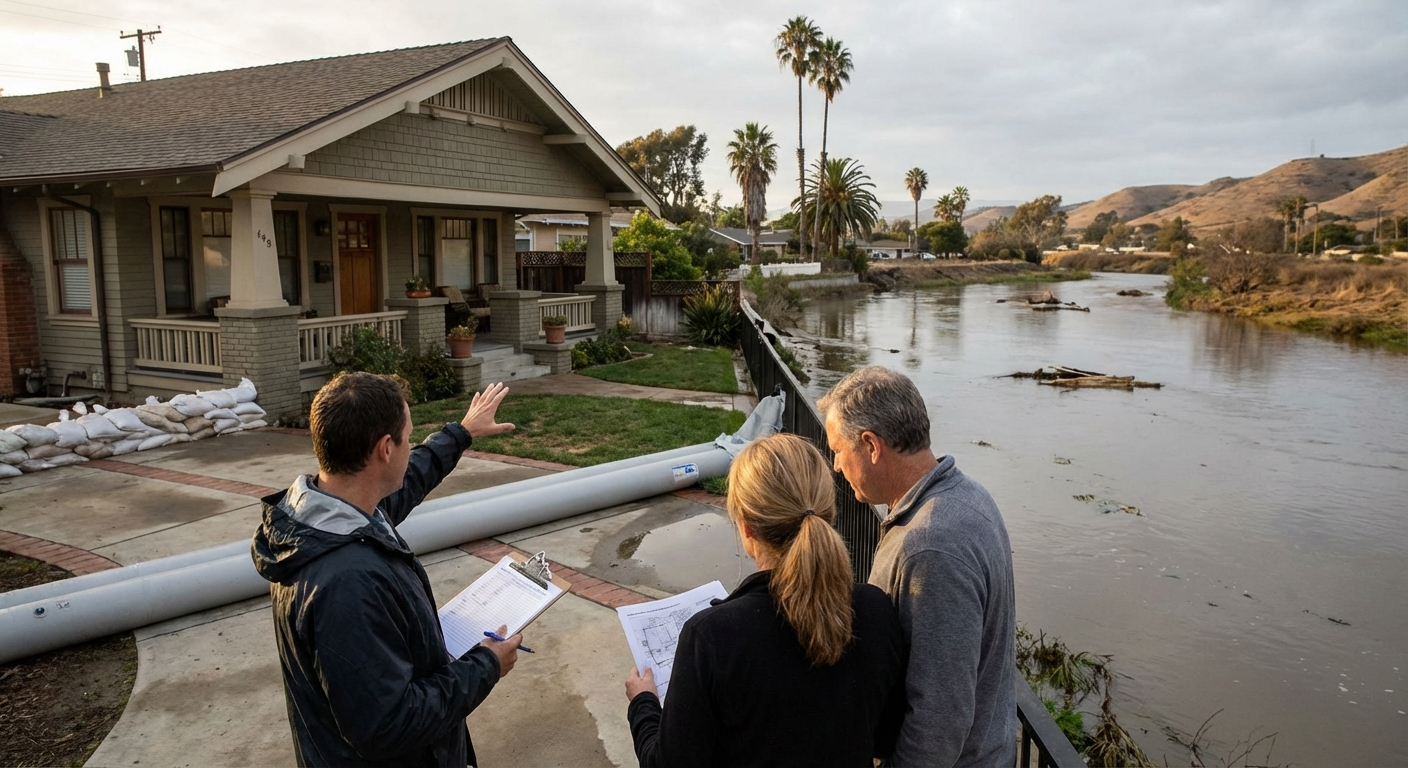
Consider urban flooding. You might be on a hill, but if the storm drains below get overwhelmed by a massive downpour, water can back up, flow downhill, and still get into your home. Flash floods are another killer. A dry creek bed can become a raging torrent in minutes, carrying debris and mud with it. You don’t need to be next to the ocean or a major river to experience devastating flood damage. Even a poorly graded yard or a clogged storm drain can turn a heavy rain into a personal disaster.
Myth #3: Flood Insurance Is Only Through the Government.
For decades, the National Flood Insurance Program (NFIP), run by FEMA, was pretty much the only game in town for flood insurance. It’s still a major player, and for many homeowners, it’s a good option. The NFIP offers coverage for structural damage to your home and damage to your belongings, up to certain limits.
But that’s not the whole story. Here’s where it gets interesting. Over the last few years, a private flood insurance market has really started to grow, especially here in California. These private policies are offered by companies you might recognize, or by specialty insurers.
Sometimes, a private policy can offer higher coverage limits than the NFIP, which might be important if you have a larger or more expensive home. Other times, for homes in certain lower-risk areas, a private policy might actually be more affordable than an NFIP policy. It really depends on your specific property, its elevation, and the local hydrology. It’s definitely worth checking out both options. You might be surprised at the difference.
Myth #4: It’s Too Expensive, So I’ll Just Take My Chances.
Honestly, nobody likes paying for insurance they hope they’ll never use. And yes, insurance costs money. But compare the cost of a flood insurance policy – which can range from a few hundred dollars to a few thousand per year, depending on your risk and coverage – to the cost of recovering from a flood.
A single inch of water in an average-sized home can cause $27,000 in damage. That’s not a typo. $27,000. And that’s just for one inch. What if it’s a foot? What if it’s two? Most homeowners don’t have that kind of cash sitting around for an emergency. Plus, federal disaster assistance, when it’s available, usually comes in the form of low-interest loans, not free money. You’d still be on the hook for repayment.
So, is flood insurance expensive? It can be. But is it more expensive than losing everything you own and having to rebuild from scratch? Not by a long shot. It’s a calculation of risk versus reward, and for many California homeowners, the reward of peace of mind and financial protection far outweighs the annual premium.
Myth #5: I Can Just Buy It When a Big Storm Is Coming.
Wouldn’t that be convenient? See a massive El Niño system forming off the coast, check the forecast for atmospheric rivers, and then quickly buy a policy. Nope. Doesn’t work that way.
Most flood insurance policies, both through the NFIP and private insurers, have a waiting period before coverage kicks in. For NFIP policies, it’s typically 30 days. Private policies might have shorter waiting periods, sometimes 14 days, but almost never immediate. This isn’t a loophole you can jump through. It’s designed to prevent people from buying insurance only when a disaster is imminent.
This means you need to plan ahead. The time to get flood insurance is *before* the skies open up. It’s a proactive step, not a reactive one. Waiting until the weather forecast looks grim is like trying to buy fire insurance when you smell smoke. Too late.
So, What’s a California Homeowner To Do?
The first step is simply acknowledging the risk. We live in a beautiful, but dynamic, state. From the Sierra Nevada snowmelt affecting the Central Valley, to coastal surges in Malibu, to intense downpours overwhelming urban infrastructure in Los Angeles – floods are a real threat.
Your next step should be to talk to an independent insurance agent who understands the California market. Someone like Karl Susman at LA Home Insurance Quotes (CA License #OB75129) knows the ins and outs of both NFIP and private flood options. They can look at your specific property, explain your options, and help you understand what kind of coverage makes sense for your home and budget. You can reach his agency at (877) 411-5200.
Finding the right flood insurance isn’t always straightforward. It requires comparing different policies, understanding deductibles, and knowing what’s covered (and what’s not). But it’s a conversation worth having. It’s about protecting your biggest asset and ensuring your family’s financial security in the face of unpredictable weather.
Don’t wait until water is lapping at your door. Get informed. Get protected. To explore your flood insurance options and get a personalized quote, visit https://lahomeinsurancequotes.com/quote/. It’s a quick way to start the process and get some answers.
Frequently Asked Questions About California Flood Insurance
What’s the difference between water damage and flood damage for insurance?
Water damage, covered by typical homeowners policies, usually comes from inside your house (like a burst pipe) or from the sky (rain through a damaged roof). Flood damage comes from outside, from the ground up – an overflowing river, heavy rain pooling and entering your home, or a storm surge. Big difference.
Does flood insurance cover mudslides?
This is tricky. If the mudslide is directly caused by a flood – meaning water overflowing its banks or accumulating and carrying away soil – then yes, flood insurance often covers the damage. If it’s a “landslide” or “earth movement” not directly related to a flood event, it’s generally not covered. The cause matters a lot here.
How much coverage do I really need?
That depends on your home’s value, your belongings, and your risk tolerance. NFIP policies have limits (e.g., $250,000 for building, $100,000 for contents). Private policies can often go higher. It’s best to discuss your specific situation with an agent to ensure you have enough to rebuild and replace what you lose.
Can my mortgage lender require me to have flood insurance?
Absolutely. If your home is in a high-risk flood zone (SFHA) as designated by FEMA, your lender will almost certainly require you to carry flood insurance as a condition of your loan. Even if you’re not in a high-risk zone, some lenders might still recommend or require it, especially if there’s a perceived risk.
What if I rent my home? Do I need flood insurance?
If you’re a renter, your landlord’s flood insurance will cover the building itself. But it won’t cover your personal belongings inside. For that, you’d need a separate renter’s flood insurance policy, which is often called “contents-only” coverage. It’s a smart move if you’re worried about your furniture, electronics, and clothes.
Protecting your California home from the unexpected is a smart move. To get started on understanding your flood insurance options, visit https://lahomeinsurancequotes.com/quote/ today.
This article is for informational purposes only and does not constitute financial advice.